Showing posts with label Books. Show all posts

Sunday, March 11, 2007

Do You Believe in Truth? Totally.

I recently read Nancy Pearcey's Total Truth and have decided to post a sort of review in a series of reflections on the book.

Adding to a recent treasury of books aiming to reinvigorate the evangelical mind[1] is Nancy Pearcey’s Total Truth: Liberating Christianity from Its Cultural Captivity. Whereas other treatments of evangelical mental laxity and compromise have focused on particular issues, most recently politics[2], Pearcey stakes out a task both more admirable and difficult; the critique and construction of an entire worldview. A bevy of books have been published in this area to be sure, but what distinguishes Total Truth is its concern for broad application of a Christian worldview. In just under 400 pages the lay reader is initiated into topics ranging from analytic philosophy (metaphysics, epistemology, philosophy of science), political philosophy, cosmology, cosmogony, biology, early American religious nationalism and the intellectual history of the Western world (replete with sociological implications for the church and the world). Were it not for the pedagogical dexterity of the author, this could have been a much larger book! But in the spirit of her mentor, Francis Schaeffer (from whom the title of the book hails), Nancy Pearcey accomplishes something just as difficult as any specialized treatment of these subjects – a conceptual analysis that is actually recognizable in real life. Indeed, the only thing more breathtaking than the breakneck pace with which these topics are covered is just how easily her assessments can be seen in American culture.

The dominating critique saturating the book is the devastating impact of naturalism (specifically metaphysical materialism/physicalism) on ethics – Aquinas’ moral argument on the offense. The consequences are both philosophical and practical. The philosophical consequence of physicalism is a sharp divide between fact and value that relegates ethics to the ghetto of private opinion[3]. The ambivalence created by dividing the world into two stories is said to create a schizophrenic polarity in the uneasy minds secularists. On the one hand they acknowledge the verifiable and certain results of science as the only public truth (public facts, or “the bottom story” of modernity), but on the other hand they retain deeply held beliefs in the significance and value of humanity which don’t fit into this category (private values, or the “top story” of postmodernity).

The cleavage introduced by the strict “scientific” standards for public truth places the top story in the relativistic flux of private opinion and personal perspective. Since public truth says that humans are essentially bags of meat deterministically driven by natural law, beliefs about the “human spirit” turn out to be a universally held necessary fiction requiring voluntary self-deception. As chief Wiggum of the Simpsons has eloquently put it, “[the secularist’s] mouth is writing checks his butt can’t cash”.

There's much to like about this approach, which we'll take up in the next few posts. As with any attempt at integration (and that's really the key word for understanding the agenda behind this book) it also involves some reductionistic homogenization. But at the outset I must say that I really enjoyed Total Truth, if for no other reason than Pearcey's deep understanding of evangelicalism's inner contradictions, instinctive dualism and populist anti-intellectualism.


[1] See Mark Noll, George Marsden, Ronald J. Sider, etc.

[2] Two recent examples are David Kuo's Tempting Faith: An Inside Story of Political Seduction and Gregory Boyd's The Myth of a Christian Nation: How the Quest for Political Power Is Destroying the Church.

[3] See Alasdair McIntyre's comments about emotivism in After Virtue: A Study in Moral Theory

Wednesday, January 24, 2007

Interview with Dr. Peter Enns

Dr. Peter Enns is the professor of Old Testament and Biblical Hermeneutics at Westminster Theological Seminary in Philadelphia. He's the author of the NIV Application Commentary on Exodus and contributed to the D.A. Carson edited Justification and Variegated Nomism, Vol. 1: The Complexities of Second Temple Judaism with his excellent essay on expansions of Scripture. I recently had an email exchange with Dr. Enns, whose most recent book Incarnation and Inspiration: Evangelicals and the Problem of the Old Testament I reviewed in three parts (which are available here, here and here). Actually, it might be more accurate to say that I responded to some other reviews - the book in question has raised no small amount of controversy in the Reformed world. Having recognized popularly prevailing gnostic notions of Biblical inspiration, Enns seeks to balance the equation with a robust explanation of Scripture's humanity - not with a view to canceling out it's divine nature, but in the hopes of deriving a nuanced analogy with the incarnate Word of God Himself. In our exchange he kindly agreed to be interviewed for the blog, which I promised my readers I'd reproduce here earlier this month.

Here it is!

Raja: Can you say a few words about the theological tradition that you currently inhabit and why it’s important to you?

Dr. Enns: As a young Christian I was introduced to the Reformed faith quite “accidentally” by stumbling into a PCA church in central Pennsylvania (New Covenant Fellowship in suburban Harrisburg). My fiancé, now wife, Sue and I began attending a Bible Study led by the pastor on Revelation. He was a WTS grad by the name of John Woll who opened up the book for us in fresh and exciting ways (“You mean the locusts aren’t helicopters?!”). That was my introduction to the Reformed Faith: a serious and honest engagement with Scripture, to go where it leads, to see it as an unfolding drama culminating in Christ, and to see how relevant and exciting God’s word is to his people here and now. This remains very important to me as I continue to work toward reflecting Reformed convictions in my own work and everyday journey. Also, what is central to me in faith and life is the Reformed emphasis on God’s sovereignty, his deep love and mercy, and my being given a new life in union with the crucified and risen Christ.

Raja: What are some conscious weaknesses of the tradition which inform your own work?

Dr. Enns: Well, any tradition has weaknesses, since we are all fallen creatures and articulate truth imperfectly. What I greatly admire about the Reformed faith in general is intellectual depth and breadth, which are of great service to the God’s people. But that strength has also been a weakness: when combined with spiritual immaturity it can lead to spiritual pride expressed in an uncharitable or even condescending tone toward other Christians who do not share those convictions or who do not hold them in the same sort of way. I think the Reformed faith needs to be extra careful to reflect Christ’s humility and think of its great tradition as a tool more than a weapon.

Raja: Is there a theological tradition outside your own that you particularly appeciate?

Dr. Enns: I appreciate different traditions for different reasons, and I feel that the various traditions all have things to learn from each other while also offering criticism when necessary. I wouldn’t say there is any one or two that make the top of my list; I try to maintain a posture of open-mindedness toward other Christians while also embracing the tradition to which I have committed myself. C. S. Lewis’s analogy in the preface to Mere Christianity has always struck me as a healthy, mature, Christian outlook. He speaks of Christianity is a grand hall out of which doors open into several rooms. We are not meant to live in the hall for long but to choose the door that we are convinced best reflects the truth. But, as Lewis continues, “When you have reached your own room, be kind to those who have chosen different door and to those who are still in the hall. If they are wrong they need your prayers all the more; and if they are your enemies, then you are under order to pray for them. That is one of the rules common to the whole house.”

Raja: Do you think Christian academics are often insensitive to the needs of the Church, and if so, how do you address this in your own writings?

Dr. Enns: I think they certainly can be insensitive, but it may be a bit of a caricature to hold all of us guilty. Still, I had a conversation with Scot McKnight about this not too long ago and he reminded me that, in the not too distant past (before the 1970’s), evangelical academics wrote much more to lay audiences. It was seen as their duty to write books that people not of the academic guild could benefit from. For whatever reason, McKnight detects a shift in the 70’s where establishing oneself in the academy became more of a priority. It is very hard work to combine a life of rigorous academic work and service to the church at large (add to that how highly specialized the various disciplines have become), but we must try to make that happen (McKnight actually pulls this off very well). But to do so means, for most of us, making decisions about what to publish and where. I would also add that part of the insensitivity can stem from academics failing to remember that they are servants above all. Sometimes we think more of what it is we know and the urgency of bringing all of that at once to people who are not prepared to hear it. If we think first, however, of what will be of benefit to others, it may affect the questions we ask and how we go about answering them.

Raja: To what degree does the evangelical debate over modernism and postmodernism in theology enter your discussion of inspiration in Inspiration and Incarnation?

Dr. Enns: I’m not sure how well that distinction captures it, at least not in a strict academic/philosophical sense of the words, but it may be appropriate from a, let’s say, temperamental point of view. For example, I&I is clearly a missional book, and so lines can be drawn to the emerging movement. I would hope, however, that a missional mindset not be exclusively associated with any one movement. (While I was in seminary, I was encouraged to think along missional lines by my professor Harvie Conn, who was quite intentional about a missional hermeneutic throughout his nearly thirty years at Westminster Theological Seminary) Also, my thoughts on inspiration are deeply influenced by what I refer to in my book as an incarnational approach, which was always lurking in the background in my seminary education, and a desire (begun in seminary and augmented in graduate school) to account for how the Bible looks as a function of its historical contexts. It is a bit interesting to me that these two influences are anything but postmodern: Reformed orthodoxy and training in modern biblical studies. Simply studying the Bible is itself an introduction to a missional hermeneutic (Chris Wright’s recent IVP release The Mission of God: Unlocking the Bible’s Grand Narrative is a wonderful and timely summation of this notion.)

Raja: Where do you feel that critics have misunderstood you most? What would you say have been the best or most helpful criticisms?

Dr. Enns: I think where the criticism have been most helpful is in pointing out some ambiguities and imprecise (and therefore misleading) aspects of the book. For example, even though I feel I qualify the matter at junctures, I can also see how I can leave the impression that evangelicalism as a whole has been misguided and in need of sweeping correction. I actually say the opposite at the outset and the bibliographies include evangelical authors, but there are a few phrases in the book that fail to make that distinction and have led to understandable confusion. Similarly, the book is not calling for a complete overhaul of Christian doctrine, only a more deliberately positive accounting of its complex human dimension, and how that accounting can influence Christian doctrine. Where I think the book has been most misunderstood is in its missional dimension. I think some critics expect a book that deals with inspiration to have a certain look and use certain vocabulary, and so respond to a book that I actually had no intention to write. Another area where the criticism has been helpful is in helping me articulate more clearly in my own mind where the divide might be among evangelicals, and I think it may have to do with the role historical study plays in how we think about Scripture, or perhaps to what extent historical context will contribute to doctrinal formulations that were made before the serious influx of historical information over the past 150 years or so. That is an exceedingly complex matter to untangle, in my opinion, but it is a task waiting to be done.

Raja: Do you read Christian blogs, and do you see theological blogging as a worthwhile enterprise?

Dr. Enns: If done “right.” Blogs can be helpful if the rhetoric and posturing are toned down. I do not think, however, that the internet is a helpful venue for any sort of really serious theological debate but more of a place for musing and dialog. Debate requires a patience and distance that are not encouraged by the “tyranny of the urgent” inherent on the internet. When we have instant access to others—without the subtleties that accompany a face-to-face meeting—we are more prone to say things that upon further reflection we would likely not say (and email may even be worse). The internet is instant yet impersonal, even anonymous at times. That encourages posturing more than a true meeting of the minds.

Raja: Is there anything else you’d like to say?

Dr. Enns: I’m glad the Yankees got Pettitte back, although I hope his back problems are a thing of the past…. Although I will always owe a deep and inexpressible debt of gratitude to “The Simpsons,” it has been losing its edge for some time now, and so “The Office” has become my favorite TV comedy…. I am really hoping I can stick with my workout schedule for more than two months into the new year.

Monday, October 09, 2006

Books I Just Bought

Foolishness to the Greeks is one of those books I've been meaning to read, if for no other reason than to understand the footnotes in just about every OTHER book I've already read. In this most classic of his many writings, Newbigin details the stormy interface between the Gospel and Western culture, replete with discussions of science and politics. All of the hype surrounding the word "missional" finds its substance in Newbigin, and that from an experienced missonary in (from my experience, anyway) one of the most culturally Gospel-inocculated countries in the world - India.


The Drama of Scripture is among the first books I've recieved and it is the one I'm currently reading. In the tradition of Cornelius Plantinga's Engaging God's World it's intended as a primer for college students in which Bartholomew and Green give the basic framework for interpreting all of life's experiences. Taking its cues in part from N.T. Wright and Al Wolters, the concept of story guides this treatment of the Christian worldview in six (as opposed to Wright's five) acts. Though the authors are informed by such philosophical luminaries as Alasdair MacIntyre and Nicholas Wolterstorff technical discussion never ends up hogging the camera, as the Biblical story takes center stage. It's proving to be a highly recommended read already. If you're interested in the topic, check out their website, based on this book.


Being compared to C.S. Lewis in any light is high praise, and Wright's book has recieved plenty of it. With Lewis' Mere Christianity haunting every page, Wright gives compelling reasons for intelligent unbelievers to consider taking Christianity seriously. The primary differnce bewteen the old classic and Wright's likely candidate for future canonization is that the former attempted to reason from commonly held first principles to Christianity along a track of logical necessity whereas the latter simply (note the title) presents the essence of Christian belief with all its internal logical consistency. The result is something that may have been lacking by the end of Lewis' treatment, namely the aesthetics of Christianity. If Lewis addressed the issue of truth, Wright builds upon it an edifice of beauty.


Having read Francis Watson's impressive and astute Paul and the Hermeneutics of Faith and being a huge fan of anything by Kevin Vanhoozer, I'm really looking forward to this little book. I've been interested in the topic of theological hermeneutics since I started reading the Scripture and Hermeneutics Series (I'm currently on volume six), and though I've seen others interact with him some, I've never read anything by Stephen Fowl. With the renewed interest in the topic (even recently spawning a new SBL study group) there's a torrent of literature available, which makes collections of essays one of the more efficient ways to keep up. Vanhoozer's recent book The Drama of Doctrine attempts to maintain propositional elements lost in postliberal approaches, and seeks to give standards for normative interpretation outside an often wayward Church without falling into the pitfalls of supposedly neutral "scientific" approaches. I'm interested in seeing his interaction with Fowl and Adam on the issue.


One of the recurrent themes in Joel Green's work, both exegetical and theological, is his attempt to bridge the gap between Biblical Studies and dogmatics. Historically at odds with one another, the divide is best seen by the distrust each discipline manifests toward the other. Commentaries repeatedly warn of the danger of importing one's theology into the text while theologians warn of the danger of atomizing the Biblical text, at the same time reminding us that without theology the Bible remains nothing more than an interesting archaeological artifact. In Between Two Horizons: Spanning New Testament Studies and Systematic Theology, Green and Turner have collected several exciting essays both describing the problems and paving the way for possible solutions. Contributors include Stephen Fowl, Robert Wall, John Christopher Thomas, John Goldingay, Steve Motyer, Trevor Hart and N.T. Wright, as well as an introductory essay by the editors.


I pre-ordered this book by Norman Wirzba based on the title alone. I don't know anything about the author, and I wasn't really looking for something on the subject - but the idea of a Christian theology of enjoying life derived from Israel's Sabbath practices is just fascinating. Working with youth, I've encountered two sorts of kids, both of which see relaxation as a brief worldly respite from the rigors of Christian discipline. The difference is that one kind of kid is cool with the worldly nature of enjoying life (in moderation), while the other isn't. It's the classic divide between libertinism and legalism, and everyone I know (including myself) leans in one direction or the other. I'm hoping this book helps in filling out a third way to a very practical problem.

Wednesday, September 13, 2006

Be a little Jewish - Read a Book

"One thing I noticed about Evangelicals is that they do not read. They do not read the Bible, they do not read the great Christian thinkers, they have never heard of Aquinas. If they're Presbyterian, they've never read the founders of Presbyterianism. I do not understand that. As a Jew, that's confusing to me. The commandment of study is so deep in Judaism that we immerse ourselves in study. God gave us a brain, aren't we to use it in His service? When I walk into an Evangelical Christian's home and see a total of 30 books, most of them best-sellers, I do not understand. I have bookcases of Christian books, and I'm a Jew. Why do I have more Christian books than 98 percent of the Christians in America? This is so bizarre to me."

- Dennis Prager in an interview from The Door magazine

Tuesday, August 29, 2006

K.J.V. Only (Well, not ONLY . . .)

As I strolled into my office this morning, flicking on the light and slapping my bag onto the desk in one rehearsed, fluid motion, I suddenly stopped and realized – I’ve got three books by the same author lying there and they happen to be three of my favorite books. The oldest is called Is There a Meaning in This Text?, the second a newer acquisition, The Dictionary for Theological Interpretation of the Bible and the third, The Drama of Doctrine – all by Kevin J. Vanhoozer, Research Professor of Systematic Theology at Trinity Evangelical Divinity School. Maybe more remarkable than the fact that they were all written (or edited, in the case of the dictionary) by the same man are the range of topics involved in each book. Is There a Meaning engages postmodern interpretation in the field of hermeneutics. DTIB blends biblical, systematic and historical theology with hermeneutics to create the quirkiest interdisciplinary resource in my library. My newest addition is The Drama of Doctrine: A Canonical-Linguistic Approach to Christian Theology, which (again) blends my two favorite subjects, theology and hermeneutics, into what promises to be another tasty read.

Though I’ve mentioned my appreciation for him before, I didn’t really realize that I was a Vanhoozer fanboy until today, so I haven’t given much thought as to why that is – but here’s a Rorschach-shaped reactionary first guess:

  1. He’s a both a scholar AND self-consciously Christian: In every book and lecture it’s abundantly clear that Vanhoozer’s interests aren’t just academic – he sees theology as fundamentally a task for the Church to be done by the Church. While many claim to be interested in a theology which refuses to divorce knowledge from practice Vanhoozer actually makes the Church’s practice a fundamental factor in theorizing about doctrine. But beyond this, all of his scholarship begins with rigorous Christian foundations, making use of Christian resources to answer hermeneutical and theological problems. For all of his kind and critical engagement, he never pretends that Christianity is a peer among equals in the marketplace of ideas. Scripture has always taken an unapologetically central role in his work (a fact not easily recognized if all you’re doing is looking for references in an index). Moreover, his scholarship is actually an astonishing testimony of the Spirit’s work, as it intentionally aims at love, joy, peace, patience, kindness, goodness, faithfulness, gentleness, self-control and humility – a rare commodity in this level of scholarship (and an even rarer commodity in the robustly Reformed circles Vanhoozer resides).

  2. He engages postmodernism both critically AND thoughtfully: Though Vanhoozer has, in his words, “cooled to speech-act theory” as a solution for every problem presented by postmodern criticism, his book Is There a Meaning in This Text? is near universally acclaimed as one of the most impressive and even-handed criticisms of postmodernism by someone arguing for authorial intention. His most recent offering in DoD does for postliberal theology what Is There a Meaning? did for postmodern literary theory, harvesting the wheat and leaving the chaff. His disposition of “disputation” (for an explanation, see another wonderful contribution of Vanhoozer’s in Christianity and the Postmodern Turn: Six Views) in regard to contemporary offerings is able to mine the gems without collecting rocks.

  3. He’s thought-provoking AND funny: Much like N.T. Wright, there’s a subtle wit about Vanhoozer’s presentation that is fun to read and even more fun to hear. Puns, double-entendre, and other wry humor is littered through every article, book and lecture in a way my brother finds annoying, but I rather enjoy. Glance through his response to Paul Helm at Reformation 21 and the corner of your mouth is bound to curl a few times.

  4. He’s theologically creative AND traditional: One of the most encouraging things about Vanhoozer’s work is that it pushes in new directions without being detached from the various anchors of faithfully Biblical scholarship. Beyond affirming all of the vanilla creeds, Vanhoozer’s commitment to Scripture’s perfection, authority and necessary guidance for the Church stands out from other scholars of his caliber. Like so few constructive theologians, Vanhoozer is able to employ new metaphors, develop new frameworks and offer critical evaluation of older models without pulling at the fundamental roots of Christian belief and practice - and maybe more significantly, without ever losing his distinctively evangelical commitment. Even when I find myself in something less than enthusiastic agreement with him (which, of course, I sometimes do – I’m a fanboy, not a cult member), his proposals never raise my hackles as pushing the limits too far.

  5. He’s profound AND prolific: The challenging and thought-provoking material isn’t only daunting in its quality, but in its quantity. As with N.T. Wright, there’s never fear that you’ll be left wanting more – there’s too much already. There are at least five books he’s edited or written which I’d still like to read, given enough time - including his Cambridge Companion to Postmodern Theology, Biblical Narrative in the Philosophy of Paul Ricoeur: A Study in Hermeneutics and Theology and The Trinity in a Pluralistic Age: Theological Essays on Culture and Religion.

Thursday, August 17, 2006

After Virtue, pt. 2

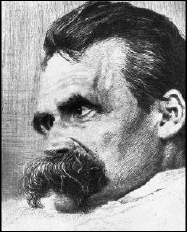
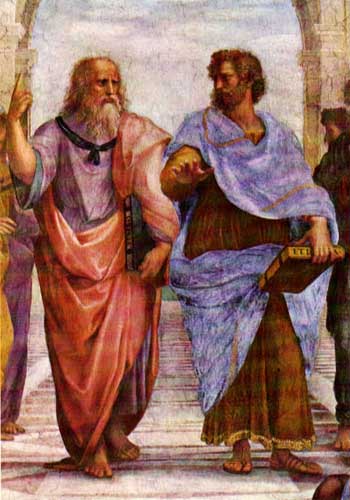
In After Virtue Alasdair MacIntyre documents the monumental failure of morality that has characterized modern ethics in the Enlightement tradition. The historiography comes to a head in a chapter called "Nietzsche or Aristotle?" wherein the author makes the astonishing claim that the the way forward in ethical theory lies in just this sharp disjunction. Having rejected Aristotle in the 15th-17th C. (embedded in the Jewish, Christian and Islamic traditions which appropriated it), the successive attempts to ground morality ultimately disintegrated into Nietzsche's realization that there is no rational justification for morality, and all such attempts simply conceal the irrational will rather than reveal moral truths. As he goes on to develop the case for virtue ethics, then, MacIntyre isn't just suggesting one of several ways forward - he's presenting it as the only available option! The choice to be made, though, isn't a strict exposition of Aristotle's ethics exactly as he concieved it, but a critical and constructive appropriation of the Aristotlean tradition - the pursuit of "the good life" in relationship to man's ultimate end.

Speaking of virtue, he says:
The virtues therefore are to be understood as those dispositions which will not only sustain practices and enable us to achieve the goods internal to practices, but which will also sustain us in the relevant kind of quest for the good, by enabling us to overcome the harms, dangers, temptations and distractions which we encounter, and which will furnish us with increasing self-knowledge and increasing knowledge of the good. The catalogue of the virtues will therefore include the virtues required to sustain the kind of households and the kind of political communities in which men and women can seek for the good together and the virtues necessary for philosophical enquiry about the character of the good. We have then arrived at a provisional conclusion about the good life for man: the good life for man is the life spent in seeking for the good life for man, and the virtues necessary for the seeking are those which will enable us to understand what more and what else the good life for man is.
Any account of ethics, then, that seeks to avoid descending into Nietzsche's nihilism must provide both an account of a unified human telos (which provides aribration for our actions and avoids seeing life as a series of unrelated moral dilemmas) and the appropriate social context in which human virtue can be exemplified (analagous to the polis). This suggestion is made over against modernism's unscucessful attempts to ground morality without a defensible telos, and that in a context of act-centered (rather than agent-centered) liberal individualism. The question, for me at least, is how MacIntyre's project may prove helpful for a distinctively Christian ethics.

I'm not a philosopher - and though reasonably intelligent, I'm not very well-informed on topics such as these. At best, I'm a curious fellow with too much time on his hands, so any criticism has to be taken with a grain of salt and without the expectation that Alasdair MacIntyre will fall upon his pen upon reading my critique - but I do have at least one major misgiving with his conception of ethics, as I've understood it (or, more likely, as I've failed to understand it). What seems to be lacking is the role that Truth (capital 'T') might play in moral discourse. I can't see how what MacIntyre is doing in this book isn't just a kind of pragmatism which, at best, can provide intelligibility for ethics, but is ulimately very little help in actual moral discourse. The lack of some kind of standard or rule by which both community and telos can be measured makes appropriating this sort of thing kind of difficult.

I'm interested to see how the subject of ethics comes up in Vanhoozer's The Drama of Doctrine: A Canonical-Linguistic Approach to Christian Theology. Where postliberals have inserted the role of community and culture in formulating the doctrine which gives sense to ethics, postconservatives like Vanhoozer have replaced it with the canon of Scripture. Similarly, Vanhoozer seems to Vanhoozer seems to give the place narrative plays in MacIntyre and Hauerwas to a much larger framework (drama), of which narrative is only one component. As interesting as I've found After Virtue, I'm looking forward to the more self-consciously Christian conception in DoD.

Friday, July 21, 2006

After Virtue, pt. 1

I've been reading a fascinating book about moral theory from Alasdair MacIntyre called After Virtue. His insights on traditional Western conceptions of ethics and contemporary ethical debate are so tantalizing and thought-provoking that I decided to post a brief series of reflections on what I'm reading. Here's the first:

One of the most common criticisms about Christian morality in the public square is that it is fundamentally sectrian. The accusation of tribalism is probably the most frequently cited evidence of religion's failure to provide ethical norms which can lead humanity out of the intractable moral debates and political tensions in which we find ourselves. Public reason, it is said, must necessarily exclude private religious conviction if there is to be any hope for positive political solutions to issues such as abortion, sexual and racial exclusion, millitary agression, economic imperialism, and the like.

In the first few chapters of MacIntyre's After Virtue it becomes clear that what he calls the "shrill" tone of contemporary moral debate is due to just this kind of tribalism, even after religion has been excluded from the public square. Observing the nature of moral debate easily demonstrates this, as opposing proponents each defend their positions with equally valid arguments based on differing values. Once the arguments are forced back to the expression of these values, such as in the case of abortion which pits "individual freedom" against "protection of the innocent" or "the principle of unviersalizability" (you do not wish that your mother should have had an abortion, therefore you cannnot allow this in the case of others), one has no rational criteria to choose one over the other. This, in turn, results in the fundamentally non-rational, arbitrary choice of personal conviction which is ultimately commended as public policy. Thus the secular landscape is no more plagued with tribalism than religious spheres of moral debate, and the facade of moral reasoning covers what amounts to personal preference.

MacIntyre gives historical reasons for this situation in recounting Kant's refutation of Hume's grounding of morality in desires rather than in reason. Kierkegaard then went beyond both Hume and Kant in rejecting both reason and passion as the ground for morality, opting instead for radical, criterionless choice. The respective failures of each view resulted in the marginalization of philosophical ethics and rational justification in the public square, hence the environment of moral relativism which dominates our culture.

This discussion is leading up to MacIntyre's account of the failure of the Enlightenment and the modern project to provide rational grounds for moral justification - but even at this point the implications of his argument are startling. It extends a problem which is typically characterized as a religious one - namely, how should believers participate in making public policy for those who don't share their beliefs - to the secular kingdoms of this world. On what grounds can anyone justify their public policy recommendations? If it can't be "reason" or "rationality", what's left of secular resources to answer the question?

Saturday, June 17, 2006

Ack!

UPDATE (6/22): Apparently Brandon Witherow, a Ph.D candidate at Westminster Seminary has been following the accusations of lubricious heresy hunters surrounding Enns' book. Both his reactions to the exchange chronicled below as well the links to previous discussions of the book are worth checking out.

UPDATE (6/18):
Steve has since posted a few new comments which both persist in missing my point and ironically label me as "angry" - I'd be happy to respond in more detail to anyone who's interested - just post a comment here; but judging from the level of vitriol gushing from his responses, and an apparent preference for "sniping" rather than talking, responding any further seems pointless. iMonk has posted some reactions to the venom which, in Steve's zeal, splashed onto him from the response to me.

That's one of the noises one makes when gurgling in his own blood, which was a metaphorical posture I took while reading Steve Hays eviscerate a few of my last posts. Steve kindly refers to me as talented, for which I'm genuinely flattered. It gets a bit ugly from there, though, as I'm subsequently referred to as cocky, juvenile and immature (which, of course, I am from time to time). Most of what motivates the (dare I say) overly harsh critique, it seems, were my comments about Don Carson (which, at second glance did come off as far snootier than I had intended). In any case, it clearly pricked a nerve, and I'm sorry.

But I hadn't intended anything like what Steve fears I meant - namely that Carson is somehow "out of touch". The point I was making, in fact, depends very much on the opposite evaluation. That point, again, is that many students within conservative evangelical circles have been nurtured on the very over-simplifications, glib harmonizations and anachronisms that Enns is addressing. Carson may take much of what Enns says as "obvious" and "unnecessary" and "less than ground-breaking", pointing to nuances that many scholars commonly accept when it comes to issues like ANE parallels and cultural situatedness in Scripture - but this book wasn't written for them. That's why the bibliographies offered by Steve in his vigorous response to my comments are helpful, but completely irrelevant.

The helpfulness of the book is its honest presentation of the challenges presented by the Old Testament - a presentation that may linger irritatingly for OT scholars to whom the issues are old hat (and to a more educated audience like Steve, who are anxious to rush to their preferred answers to long-known questions). But for new students who are newly coming to grips with these glaringly terrestrial marks of Scripture, it is an exceedingly wise introduction because it takes their context seriously - namely that of the raging Bible wars between liberals and conservatives, marked by a posture of defense in conservative evangelical churches. The "doceticism" described by Enns in relation to the Bible is, in my judgment, a wise strategy for acknowledging the popular emphasis on Scripture's heavenly origin over against marks of its human composition. That - not an attempt to present a comprehensive theological (or hermeneutical) model for understanding Scripture - is the goal of this book. That's also why Carson's desire for a more detailed exposition of the incarnation analogy misses the point. Again, my criticism wasn't that Carson is an idiot - it's the opposite. He's an impressively credentialed biblical scholar. But this book wasn't written to whet his academic appetite, it was written to deal with what can be a crisis for students who have consistently heard only one side of the story.

It's important to point out that this was really my main criticism of both Carson and Helm. You'll see that at the end of my comments I noted that I felt both of their criticisms, cautions and suggestions weren't inappropriate. Neither my review, nor the book, implies that there haven't been real attempts to solve the kind of universally acknowledged theological and hermeneutical difficulties which Enns discusses, that Enns is somehow dealing with issues no one has ever dealt with before, or that conservatives have somehow "locked away evidence". You'll not find any of those sentiments in my review, and Steve's recitation of well-known books and authors don't refute claims that I never made. Neither did I claim that these men were oblivious to the various debates and difficulties in the OT, or that Enns was particularly ground-breaking in his approach to the difficulties. What I did say, and am still saying, is that Enns is to be commended for knowing his audience - he's not a Tubingen liberal speaking to an academic audience. He's a Reformed, conservative evangelical speaking to conservative evangelical students. He realizes (in a way that I think Carson didn't take into account) that he's not talking to "Arians", but to many who have been gorged to excess on apologetic discourses on the timeless, enduring, and heavenly qualities of the Bible and, when confronted with its cultural moorings, are coming to a point of crisis. Characterizing such a demographic as "angry young men" both illustrates and exacerbates the problem Enns is trying to address.

There's more to say, especially about Steve's suggestions about apostolic exegesis (and perhaps about Enns repeated assertions that demonstrate his unwillingness to admit of "errors"), and perhaps I'll do that later. But I should probably end my explanation with a reminder about the mode of communication being utilized here. Blogs, for me, anyway, are somewhere in between an email and an essay, both in their manner of expression and their content. Like an email they are often informal codifications of a person's thoughts, and aren't meant to be taken with the precision of a serious publication. So while they bear certain marks of an essay, with argumentation, critical reflection and even a certain polemical edge, they shouldn't be taken as final pronouncements as much as an invitation for discussion. More importantly, like email, they're not very good reflections of what a person is really like. Steve seems to take me for an unfortunate blend of talent and egomania. I fear that this appraisal may come from taking me even more seriously than he's convinced I take myself. His apparent distaste for my presence at the Boar's Head Tavern, for instance, seems to assume that its very much like a denominational association of some kind rather than an attempt to meet new people, make new friends, and talk about areas of interest. After feeling thoroughly clobbered by his comments it did me some good to remember the potential for distortion refracted by what bloggers write during a few minutes of distraction from the rest of their busy lives.

Tuesday, June 13, 2006

"Enns-piration" pt. 2

Last week I gave a brief plug for Peter Enns’ Inspiration and Incarnation: Evangelicals and the Problem of the Old Testament, saying that it provided an essential dimension to the doctrine of inerrancy. His basic thesis is that Biblical revelation comes in the form of enculturated human expression, and that affirming the humanity of Scripture doesn’t negate it’s divine origin – it actually affirms it, because it follows the pattern of Jesus’ own divinity as the incarnate God.

Enns isn’t the first to suggest the incarnation as a theoretical model in which to understand Scripture, but his articulation of it does put him at odds with certain sectors of his own tradition. The book has drawn some criticism, in part from those who remain puzzled that more people aren’t aware of Gleason Archer’s definitive resolution of these issues years ago. Others simply dismiss it on the grounds that the Westminster confession never envisioned the proposal. But it’s also drawn criticism from more notable evangelical stalwarts. In his review, Paul Helm, Emeritus professor of philosophy at the University of London, called the book a superficial theological and epistemological “failure”. Don Carson, in a tripartite review, criticized the book for giving more space to fighting the “docetist” (i.e. the over-emphasis on the divine) than to fighting the Arian (i.e. the over-emphasis on the human). In the end he finds Enns to be decidedly “non-pastoral”. Unfortunately (and ironically) the criticisms are more troubling than anything in the book, because they fail to take seriously both the audience and the pastoral problems which Enns is addressing.

I’m not sure which churches Don Carson has attended in his lifetime, but from the sound of it they are highly sophisticated, gingerly nuanced and impressively level-headed pulpits. Either this is a pleasantly uncanny experience or an intentionally blind optimism. In either case, with statements like “Most of us glory in the fact that God has disclosed himself to us in space-time history, in real words, to real people, in real languages” and “[ANE parallels] should cause no surprise among those who fully recognize how much the biblical revelation is grounded in history” one wonders if Carson has ever been to an average conservative church meeting in his entire life. One of my Sunday school attendees was shocked and horrified at a remark that Jesus’ teaching sprung from His study of the Law and the Prophets, declaring that He didn’t need to “study” because He was God and His teaching was a “direct revelation from God”! A few families left a neighboring church because of their outrage at the preacher’s suggestion that Paul was in any way affected by his surrounding culture.

The fact is that evangelical pulpits typically ram an apologetic agenda through the text of the Old Testament to the degree that the text becomes a side-issue. Maybe I’m in the backwoods of conservative evangelicalism, but I’ve never heard a sermon in Genesis that didn’t comprise your basic “creation vs. evolution” seminar. I’ve never heard about ANE parallels and similarities to ANYTHING in the Law (much less the creation story) coming from the pulpit. Moreover, I’ve never, not once, heard the call to honor the Scripture’s diversity coming from my Sunday School class, and the models for resolving “apparent conflicts” which were held out to me have consistently been the voices of steam-rolling harmonization. What both Carson and Helm seem to miss is that this experience is much more typical than they’d like to admit, and the failure for evangelical scholars to admit it is one of the chief reasons doubt arises in the hearts of young students who have been nourished on the very over-simplifications and polarizations Enns is seeking to correct. In other words, where Carson wants scholarly nuance and fine-tuning in Enns’ characterizations are precisely the points at which most haven’t ever heard such nuance and fine-tuning. And that’s the point of this book. Many of those who would reject the tenents of this book would be equally queasy about the Longman book Carson recommends instead. Though Carson’s first criticism is that Enns doesn’t really understand his audience, the shoe appears to be on the other foot – it’s Carson who doesn’t seem to understand the dissatisfaction of disaffected students who are looking for evangelical scholars to recognize the polarized messages they’re actually hearing in their pulpits and classrooms (a longing he labels “the angry young man syndrome”).

Likewise Helm, who states in the opening lines of his review: “[Enns] writes about the identity and purpose of the Bible by concentrating on the difficulties of interpreting some Old Testament data. This should immediately arouse our suspicions.” Such a statement will provide little comfort for those who are tired of having theological glaze poured over what seem to be real difficulties in actually interpreting the text (the place where we’re supposed to get our theology) - in other words, the audience of this book. It’s no surprise, therefore, to hear these criticisms coming from two systematic theologians. Both Helm and Carson interpret the book as giving “priority” to the human marks of Scripture (which is really the source of Carson’s complaint that “too little time is given to the doctrine of incarnation”; i.e. too little time spent on the divinity side of the analogy) – but such a criticism demonstrates a studied blindness toward exactly where the pendulum actually is in conservative churches today. In their continued fight against encroaching liberalism conservative evangelicals aren't struggling with Arian tendencies – they’re struggling with docetic ones. Perhaps fighting rabid docetism isn’t best suited to the strategy of giving “equal time” to fighting Arianism. Regardless of such a judgment, though, neither Carson nor Helm ever present what an alternative to Enns’ proposal might actually mean. Surely the CONTENT of what is gained in the process of interpretation is the divine Word of God; and certainly the PROCESS of enscripturation is divinely ordered – but in what sense is the mode of expression “divine”? The authors were “born along by the Spirit”, but what “heavenly” qualities should we expect to find in the actual words of Scripture? For all the protest against Enns’ supposed “interpretive naiveté” in regard to Arianism, beyond giving attention to the cultural, historical, and linguistic temporalities of the text, I’m not sure what else is an interpreter is to do.

Enns book really seeks to stimulate the imagination as to how the Bible can be a product of human culture and still be the divine Word of God. His answers are meant to be suggestive, not comprehensive, and though Carson states his criticisms as not “to ask Enns to write an entirely different book”, that, in the end, are what his criticisms amount to. Helm’s review falters under a grosser failure, namely the refusal to reckon with the core of Enns’ vision, which will resonate in the minds of many students – namely that the actual phenomena of Scripture (not merely Scriptural affirmations of its reliability) should be at the bottom floor in formulating our understanding of how Scripture works. Instead, he simply states that “he starts at the wrong end”. That accusation misses the point not only because starting with the phenomena of Scripture IS HIS PROPOSAL, but also because of the degree to which apologetics has defined the agenda in conservative sectors of OT studies, and have fueled the very excesses the book seeks to curb. Both Carson and Helm glibly bypass the most difficult examples of diversity within the OT canon, Carson by offering his own potential harmonization of the less significant examples and Helm by skipping the actual data altogether (how Helm can accuse him of “fideism” and at the same time recommend “staring from dogma instead of difficulties” is beyond me). For these reasons, and a few more from which I will spare you, I believe Inspiration and Incarnation stands up under scrutiny; not because the criticisms are devoid of useful critiques, appropriate cautions or valid suggestions, but because Enns' words, like apples of gold in settings of silver, are provocatively delivered in exactly the right circumstances.

Monday, June 05, 2006

"Enns-piration"

I recently finished Peter Enns’ brief introduction to the difficulties of an evangelical doctrine of Scripture presented by the Old Testament. The book is called Inspiration and Incarnation, and as has been pointed out by others, it’s an important read for inerrantists such as myself.

Enns’ basic thesis is that a doctrine of Scripture should arise from the Scriptures themselves. Well, duh. But as you might expect, that recommendation turns out to be much more controversial than it initially sounds, because Enns is concerned not only about conforming our doctrine of Scripture to the Biblical testimony of its authority but to the phenomena of Scripture itself – with all its cultural moorings, rich diversity and strange uses of previous texts. These three issues only become problems in need of creative explanation if one develops expectations of Scripture from outside Scripture – which is precisely Enns’ critique of modern notions of inspiration. The result of such modern formulations is that interpretation becomes an exercise in a rather shifty brand of apologetics – ANE parallels are completely ignored in order to make the Bible appear culturally timeless; texts with genuinely different perspectives are forcibly crammed into a homogenized goo in order to make the Bible appear seamlessly harmonized; the hopelessly unscientific method with which Scripture uses Scripture is either dressed up as historical-grammatical exegesis or unconvincingly privileged as a non-repeatable apostolic privilege – all from a desire to rid the Bible from any signs of being a genuinely human (as well as divine) production.

The answer to such distortion, says Enns, is to see the written Word of God functioning according to the same nature as the incarnate Word of God – a perfect symbiosis of humanity and divinity. Jesus perfectly revealed the Father not as a hovering wraith or Docetic illusion, but as a genuine 1st C. Jewish man. He spoke the language, lived and participated within ancient Palestinian culture, and displayed all of the creaturely dependence requisite to humanity. He wasn’t a god just pretending to be a man, as so many seem to believe (and then wonder why they’re not moved by the stories of suffering and crucifixion in the Gospels). He was God anchored in time, culture and finite dependence upon the Father. The written Word of God should be understood as revealing the Father in the same way. As evangelicals continue to thrash about over theories of inspiration, some are drowning and others are barely treading water while the actual content of the Bible – in all of its varied and richly enculturated glory – circles the drain. In the next week or so, as I have time, I’ll be posting an evaluation of some of the criticisms I’ve read (from the likes of such Reformed luminaries as Paul Helm). In the meantime, Inspiration and Incarnation: Evangelicals and the Problem of the Old Testament is required reading.

Saturday, November 26, 2005

Book Bonanza

This is one of the books I got for free at a publisher's reception. John Armonstrong sees this book as an important attempt to see both the human and divine facets of biblical revelatioon in thier apporpriate fullness. He generally praises the book in his review and laments the treatment it's recieved in Reformed circles. For those who may be interested, Joel Garver also wrote a review here.


This is another give-away title I picked up at the conference. It looks to be typical of Packer's sanctified optimism, and for that reason alone promises to be a refreshing read. You can read David Neff's write-up on it from Christianity Today.


Richard Horsley's work on Paul and Empire make this a tantalizing complement to Thiselton and Fee as I preach through this epistle. Horsley sees the Corinthian Christian community as an alternative polis and highlights the political nature of Paul's gospel.


I'm looking forward to reading some comments on Romans outside the New Perspective axis of controversy. Keck's apocalyptic reading of Paul and commitment to let Romans stand on it's own (instead of smashing it together with Galatians) will make this a fun read for my Sunday School preparation.


Tom Wright whimsically commented about the horrible title afforded this treatment biblical authoirty, along with the random picture slapped on the front cover. Yet the depiction of Jesus on the front of Wright's treatment of the Bible's authority seems appropriate, since he strenuously argues for biblical revelation's dependence upon God's own authority exercised in Jesus. Here's a taste of Wright's thinking about the matter from Vox Evangelica.


I've immensely enjoyed the other volumes of The Scripture and Hermeneutics Series, and this one looks paritcularly good with contributors like Gerald Bray, Chris Wright, James Dunn, John Webster and Charles Scobie. If Dunn's contribution is any indication of this volume's quality, I can't wait to dig in! There's a brief revew for your consideration at Beginning With Moses blog.


Since the whole point of the series is to engender deeper understanding of the biblical text it's fitting that they focus an entire volume around the actual work of interpretation. Reading Luke, the latest offering in the series, features some first rate contributions from Anthony Thiselton, Joel Green, David Wenham, I. Howard Marshall and Max Turner. In addition to theological interpretation and issues of language, an entire division of the book is given to issues of historical reception of the Gospel.


One of the most enjoyable sessions I attended was the panel review of this new reference volume from Baker. The criticisms included a lack of attention to historical critical issues and a leaning toward the Reformed Anglo-American contributions to the topic; but these criticisms aside, it looks like a truly majestic piece of work, and I've been looking forward to its publication for a year now. I've already perused a few articles and have enjoyed it immensely as a bedside "readers digest" of diverse theological interest. With the conference discount, this is the best 25 dollars I've spent in a while!


I heard John Milbank speak at SBL and I have no idea what he's talking about. I've had my interest in Radical Orthodoxy piqued by reading Hauerwas and Yoder, but thus far I've never encountered its British roots. In attempting to read this book on the plane back to Idaho I felt as though i'd been dropped into the middle of a debate I didn't understand. All that to say I think I may pick up Smith's other volume on the topic to get some idea as to what's going on, but until then I'll have to take this one slow with a broadband connection close by so that I can look up all of the unfamiliar nomenclature.


I've already read much of this book and was enthralled by the colorful and coherent picture Hays paints here. Using the categories of community, cross and new creation Hays masterfully draws a unified thread from the tapestry of New Testament witnesses. For a less than glowing appraisal, see Dale Martin's review; but for a more evenhanded treatment, see Mark Goodacre and Gilbert Meilaender.

Friday, November 25, 2005

ETS, IBR, SBL, AAR and PETA


. . . okay, not PETA. But I did return from ETS/IBR/SBL/AAR this week, and I had a marvelous time with some of my most cherished, colorful, Caucasian friends around the country. Even though it wasn't long before our room began to smell like a Bombay bus station, spending time with these guys is always worth the price of admission. Please accept my apologies for the sparse posting! In any case, after having some time to process the various papers and conversations I experienced, I thought it might be appropriate to blow the mucus which is my reflection onto the Kleenex which is this blog. Why else would I call it "Soylent Green"? Rather than chronicling the iterations of my thoughts in every individual seminar I attended, allow me to enumerate some general themes I found to be of interest:

1) Epistemology: In just about every session I attended, the issue of epistemology lingered around the edges of the paper, only to come periodically crashing to the center, especially when dissent was expressed by panelists or audience members. When it comes to theological discourse, it seems increasingly the case that Jerusalem has actually been relocated to Athens. Issues of prolegomena and theological method have become hot-button topics in Biblical studies, and in many ways I see this as a positive development: Evangelicals are now being forced to lay their philosophical cards out on the table and expose their epistemological underwear. This kind of methodological strip-poker is the necessary beginning for any meaningful rapprochement in that it must be acknowledged that the correspondence theory of truth, accounts of epistemic justification, and traditional theories of language can neither be found in the pages of Scripture nor referenced as “obvious” common sense. Being forced to defend these notions in all of their philosophical technicalities highlights just how NOT common sense the issues really are.

In other ways, though, the center stage given to philosophy can be somewhat frustrating. For one thing, the theologians discussing the issues don’t always have formal training or adequate grasp of contemporary debates in epistemology, which inevitably leads to muddled distinctions, well-worn caricatures and passé (re)formulations. My frustration with this is particularly acute, since I’m only being introduced to these issues via theological debate, only to find out upon further research that my confusion has as much to do with the major participants as with my own initial unfamiliarity. What is foundationalism, and is the rejection of it a rejection of both strong and weak varieties? By anti-realism are we referring to a metaphysical or epistemological position? Is the debate over foundationalism about epistemic justification, or is it a disagreement as to what counts as knowledge in the first place? Is a rejection of correspondance a rejection of Truth? In listening to the debates the answers to these questions aren’t always clear. What is clear, however, is that engagement in these disciplines (philosophy and theology) is crucially clarifying for both parties. The discussion between Merold Westphal, James Beilby, John Franke and Kevin Vanhoozer at the Evangelical Philosophical Society was especially helpful in illuminating this point. Keep watching this site, as I may be posting an mp3 of this session soon.

2) Postmodernism: The buzzwords in greatest currency at all of the sessions I attended were terms related to postmodernism - postfoundationalism, poststructuralism, postcolonialism, postconservativism and the like. The fact is, whether one likes it or not, the contours of contemporary debate in most of the disciplines within the guild of Biblical studies (including theology, hermeneutics and missiology) is being shaped by the variegated challenges of postmodernism. The positive effect of this has been the chastisement of positivistic excess and the cultural hegemony exercised by these disciplines under the guise of rational purity and detached objectivity (and hence the increasing discussions of prolegomena mentioned above). Yet, the negative effect is that since postmodernism tends to be more of a critique than a positive contribution, the void left by such criticisms tends to be filled by an untenable skepticism which seems incompatible with the missional prerogatives of the Church. Most of the friendly wrangling with my pals at the conference was over these sorts of issues, but the tension remains - how does one appropriate the global criticism of postmodernism, and the potential it holds for subverting the traditional impasses of Biblical studies, without resorting to nihilistic incredulity? Fortunately some positive contributions have been made in light of postmodern: Though Vanhoozer mentioned that he was "cooling" to speech-act theory as a panacea for all theological ills, I still think it represents heuristic value for textual meaning; Reformed epistemology holds some promise for an account of theological knowledge (while Bruce Marshall attempts a different account by way of a semantic conception of truth ala Alfred Tarski); critical realism is, if not rigidly methodological, at the very least an attitudinal middle-way between positivism and skepticism; Barth has proven to be a resource for a theological account of our knowledge of God, the Bible, and the (in)adequacy of human language, etc. As for the lasting value of these and other proposals, time will tell.

3) Theological interpretation: There seems to be a growing interest in the Bible as a Christian book. While that sounds like a stupid thing to say, the fragmentation of Biblical studies into adversarial sub-disciplines has presented a well-recognized crisis for churchly appropriations of the Bible. Historical criticism and biblical theology emphasize development, dissent and fundamental disunity in the pages of Scripture while theologians and systematicians wrestle these particularities into submission so that Christians can meaningfully speak of one book, one Gospel. Unfortunately the tug-of-war between unity and diversity has resulted in something worse than a stalemate; it’s created a taut rope for educated clergy to trip over. But a heartening turn was felt at this year’s annual meetings with Baker Academic and Brazos Press both publishing commentary series dedicated to the theological interpretation of Scripture, as well as The Dictionary for the Theological Interpretation of Scripture, a stupendous compendium of articles related to this attempted reclamation of the Bible for the Church. Of course the Scripture and Hermeneutics Series has also attempted to grapple with the issues raised by the Bible turf wars. Concurrent with these ongoing publications is the formation of a new study group within SBL, as well as a biannual journal dedicated to the topic. Hopefully these developments, alongside burgeoning theological projects which emphasize the controls of community identification and the rule of faith, represent a return to Biblical studies as a churchly endeavor.

Wednesday, September 28, 2005

Lookit - New Books!

Well, new to me, anyway. I'm excited about reading three new titles I just recieved from IVP, as well as one on the way from Fortress Press:

Roger Olson is a regular contributor at the Think Tank, which, most recently, featured his article concerning the future of Evangelicalism. My personal interest in a more irenic and Spirit-filled interaction between the various corners of evangelicalism naturally stimulated interest in The Mosaic of Christian Belief. I've been looking forward to reading something of a more "editorial' style, and Olson's discussion of the various continuities and discontinuities which beset Christian theologies seems like it'll satiate both my desire to investigate this topic and my craving for a more conversational style. If it turns out to be as engaging as I'd hoped, I may end up reading the companion volume as well!

John Stott says on the back cover, "I defy anybody to emerge from exposure to this book unscathed. In fact, my advice to would-be readers is "Don't! Leave the book alone!" - unless you are willing to be shocked, challenged, persuaded and transformed." That's some superlative praise from a highly respected churchman! I have to admit that I'm a little less excited to bite into this one, since my reading to date on the topic of social justice has had an overamped ideological "prophetic call" devoid of a "feet in the dirt" kind of instruction as to how I can contribute to God's kingdom plan in this area. Nonetheless, I trust that Good News About Injustice by Gary Haugen will offer some helpful insight!

I confess that I've never heard of Veli-Matti Karkkainen - but I've yet to read a single volume entirely devoted to an ecclesiological survey, and I figured that this might be a good place to start. The table of contents detail the figures Karkkainen intends to deal with, and include notable figures such as Hans Kung, Wolfhart Pannenberg, Jurgen Moltmann, Miroslav Volf and Leslie Newbigin. He also expands his discussion of the topic to include a wider international perspective, with considerations of Asian, Latin American and African perspectives. After having read An Introduction to Ecclesiology I hope to have a stronger grasp on the contemporary scene in this important area of theological consideration.

Of the four books, I'm looking forward to reading this one the most. The Economy of Grace was featured in an interview with Kathryn Tanner I happened to catch on InterFaith Voices (NPR). I was fascinated with the idea of a practicable theological economics centrally focused around the concept of grace. What I heard in the interview echoed Yoder's sketches of Jubilee abundance with the attempt at a more detailed, practical outworking. Since questions of neighbor love inescapably involves economics, and the system we imbibe and within which we participate necessarily rewards injustice, a theological conversation with capitalistic ideologies seems as though it should be an invetible challenge of the Church. Here's hoping the conversation doesn't descend into a baptized socialism . . .

Friday, August 26, 2005

Jihad Jeopardy

UPDATE: For a great introduction into the Just War tradition, particularly in relationship to American foreign policy, check out this lecture by Jean Bethke Elshtain. Dr. Elshtain is a professor of social and political ethics at the University of Chicago. Also be sure to check out an interesting post on the ThinkTank regarding Justin Martyr's take on the relationship of church and state.

Lately I've been reading a book by J. Daryl Charles (a Union University ethics prof.) called Between Pacifism and Jihad.

It's something of a primer on just War theory, and as such critically interacts with the recent neo-traditionalist and pacifistic trajectories of Yoder and Hauerwas. Though it has its fair share of mischaracterization, and in my estimation doesn't reallly do justice to the heart of Yoder's theological critique, its been rather informative as to the development of America's consensus on the ethics of war and violence. It also highlights how Just War advocates are driven by precisely the issues raised by the weaknesses of the books mentioned in my previous post. But just as Hauerwas and Camp raise some unanswered (or insufficiently answered) questions, Charles raises a few of his own. I thought I'd post some of them for your comment and interaction:
  • Does Augustine’s concept of “two cities” accommodate the apocalyptic aspects of the Gospel? In other words, how does someone with a "dual citizenship" emphasis preach the kingdom of God as a real alternative to the kingdoms of this world?
  • If pacifism marginalizes civic responsibility, does just war theory inadvertently marginalize the Gospel as only dealing with “otherworldly” concerns?
  • How can one be faithful to the exclusivity of the Gospel and at the same time admit a basis for justice and peace not rooted in the Gospel (but are instead “rooted in moral realities” that are not “narrowly Christian” pg. 60)? In other words, does Just War Theory cleave faith from reason in Enlightenment fashion?
  • Is just war theory naïve in assuming that modern acts of war are in fact an execution of justice aimed at restraining evil? In other words, when governments resort to war in their pursuit of agendas outside of God’s moral will, with no redemptive trajectory in sight, can that war be called “just”?
  • Is it naïve to assume (as just war theory does) that one can pursue public policy (including war) for the best good of all apart from religous or ideological motives? If so, the question becomes: which religious or ideological motives should be driving these decisions?
  • When can pursuing national interest and international competition be called sin, and when should it be considered a necessary good (as appropriate boundaries of stewardship given by God)?
  • By what authority is a state recognized as legitimate so that it may fulfill the duties assigned to it in Ro. 13 (including "bearing the sword")?

I don't even have a provisional answer to any of these questions, so be a pal and PLEASE COMMENT!!!

Tuesday, August 23, 2005

The Christian Colony's Pledge of Allegiance

Mere Discipleship: Radical Christianity in a Rebellious World. By Lee C. Camp. Grand Rapids, MI: Brazos Press, 2003. 208 pgs. $14.99.


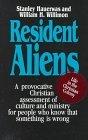
Resident Aliens: Life in the Christian Colony. By Stanley Hauerwas and William H. Willimon. Nashville, TN: Abingdon Press, 1989. 175 pgs. $16.00.


Though John Howard Yoder spent much of his career with a strange disinterest in academic publishing or scholarly recognition, he managed to leave an indelible mark on the landscape of contemporary biblical theology. His most well known work, The Politics of Jesus was among Christianity Today’s most important Christian books of the 20th C. and has continued to challenge prevailing evangelical assessments of just war and the relationship between church and state. Two offerings of Yoder’s progeny, one old and one new, carry the torch he lit in 1972 when PoJ was first published. In these volumes Stanley Hauerwas (professor of theological ethics at Duke Divinity school) and Lee Camp (assistant professor of Christian ethics at Lipscomb University) have sought to bring the insights of Yoder’s more technical work to a broader audience.

Although both works commend pacifism as inseparable from Christianity, the central thesis explored by Camp and Hauerwas can be appreciated by even the most committed just-war advocate; namely the vision of the Church as God’s kingdom, an alternative community to the kingdoms and cultures of this world. It is because these books herald that message so boldly that everyone who calls himself a conservative evangelical should probably read them every day and twice on Sunday. There are two flimsy poles anchoring the net of those who proudly wear that label. On one side there are the mega-Church marketers who offer salvation along with a free oil-change (while you drink a Gospel-ccino at the café located in the church foyer) and on the other side there are those whose identity is so wrapped up in defending a list of propositions that if everyone were to suddenly agree, they would instantly kill themselves. What’s missing on both ends, of course, is the concept of a confident commonwealth marked out every bit as much by its practices as its propositions.

But the vision offered by Camp and Hauerwas is not the “best of both worlds” from these two outlooks, a melding of evangelistic zeal from the church growth movement and the community-exclusivity of the doctrinal vanguard. It is, rather, a radical critique of both of them in the hopes of an entirely new synthesis. The root of that critique is in the contention that from at least as far back as Constantine the Church has been co-opted by competing powers that remain under God’s judgment. By identifying our primary heritage as American (or anything other than the people of God – spiritual descendents of Abraham, Isaac and Jacob) we have implicitly bought into their story of the world, which is in direct conflict with the Biblical story. In so doing the Church loses its identity as an alternative path. Hauerwas notes: “Each age must come, fresh and new, to the realization that God, not nations, rules the world. This we can know, not through accommodation, but through conversion” (pg. 28). The cash value of this for evangelicals is to expose all of our unholy alliances which we routinely use as escape hatches from the Sermon on the Mount (i.e. American democratic ideals, conservative republicanism, consumerism, patriotic nationalism, etc.). These alliances (which both authors refer to as “Constantinianism” or “the Constantinian cataract) not only pervert Gospel definitions of concepts like freedom, religious liberty, fiscal responsibility and so on, but they virtually erase the lines between the church and the world in all matters public and political.

This, of course, relegates the Church to the backwoods of irrelevancy in public life; just one insipid offer of personal fulfillment among many. Instead of the Church being the evidence of God’s work in reclaiming the world, it becomes an optional resource for personal inspiration to those who would seek it. It’s no wonder that “witnessing” in this framework has become something less than testifying to God’s in-breaking kingdom evidenced in the formation of Spirit-filled communities who follow Jesus (not Caesar, not religious leaders, and not themselves) as their Lord.

Of the two books Camp does a much better job of appropriating these observations for popular consumption. By discussing these topics under the rubric of discipleship Camp delineates how pursuing God’s kingdom as a radical alternative to worldly common sense makes a difference in worship, baptism, prayer, communion and evangelism. It is seldom seen among conservative evangelicals how the agenda of the political right runs counter to our highest ideals as Christians, namely the worship of the One true God. Camp’s words poignantly reveal the conflict in quoting conservative political journalist George Will: “Will’s central thesis – a forthrightly idolatrous claim – is of great concern: ‘A central purpose of America’s political arrangements,’ Will claims, ‘is the subordination of religion to the political order, meaning the primacy of democracy.’” Although this chapter questionably marries this kind of analysis with the necessity of pacifism, it remains a pungent indictment of moral majority/religious right Christians. Camp’s insights on communion, table fellowship, the sharing of wealth and Jubilee theology is foreign to (and devastating for) the piously self-indulgent evangelicalism to which I belong. The opening quote from Albert Camus in Camp’s chapter on evangelism summarizes the sentiment of both books: “The world of today needs Christians who remain Christians.”

The derivative question of how Christians should think about war and violence is an important one, and these books offer substantial challenges to those who uncritically accept the necessity of participating in war, even among Christians. What fails to emerge from the criticism, however, is a comprehensive picture of how governments should conduct themselves in light of the sin that governs all individual human conduct. The “let the Gentiles do it” sort of attitude which dominates both works successfully avoids a theonomic solution to the problem, but never seriously grapples with the various ways in which loving one’s neighbor seems to entail promoting specific public policies. The question of how Christians should evaluate the merits of particular governments, as well as the degree to which they are carrying out their God-given function are left unanswered. Related to this weakness is the fact that both books fail to give an account of how Christian ethics can hold the nations of this world universally culpable and yet only be applicable for the community of faith.

Shining brightly through these sorts of theoretical weaknesses, though, is a breathtakingly Biblical view of the Church and its role in the world. Its time for the leaders of the evangelical world to wake up to the fact that the problems we commonly face in the church – division, moral decline, the moral failure of church leaders etc. – has less to do with to do with doctrinal aberrations than with our fundamental failure to follow Jesus. Consider the words of Yoder (quoted in the opening of Camp’s book):


Jesus was not just a moralist whose teachings had some political implications; he was not primarily a teacher of spirituality whose public ministry unfortunately was seen in a political light; he was not just a sacrificial lamb preparing for his immolation, or a God-Man whose divine status calls us to disregard his humanity. Jesus was, in his divinely mandated prophethood, priesthood and kingship, the bearer of a new possibility for human, social, and therefore political relationships. His baptism is the inauguration and his cross is the culmination of that new regime in which his disciples are called to share. Hearers or readers may choose to consider that kingdom as not real, or not relevant, or not possible, or not inviting; but . . . no such slicing can avoid his call to an ethic marked by the cross, a cross identified as the punishment of a man who threatens society by creating a new kind of community leading a radically new kind of life.